Leon Duguit
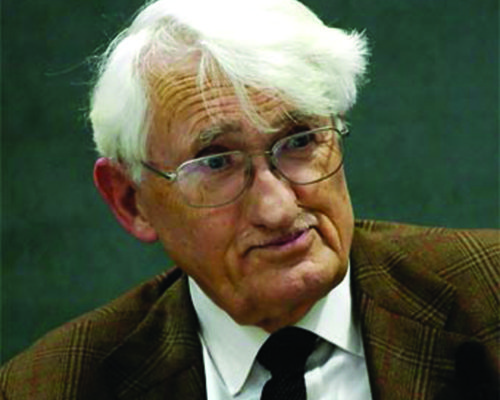 Leon Duguit was born in the year 1925. He was a respected French jurist, dean of the law school at Bordeaux, and author of a series of works which criticize traditional juridic opinions and ideas.
The first work in which he began to develop the basis of his doctrine was written as a response to ‘The System of Subjective Public Laws’ by the noted German jurist George Jellinek. In this and in later works Duguit criticizes the juridic conception of the state; he also criticizes the very notion of subjective law, rejecting it as an “individualist, metaphysical construction” inherited from Roman jurists and medieval scholastics and received through the French Revolution.
Leon follows the views of the French sociologist Emile Durkheim and considers that norms of objective law are based on a law of social solidarity. Social solidarity occurs when people have common needs which can be satisfied jointly, and when people have different needs and different abilities which can be satisfied through the exchange of mutual services. Proceeding from these propositions, Duguit tries to replace laws with obligations.
Even private property – the most characteristic institution of individualist, bourgeois society – is presented as a social function by the jurist.
Rejecting the notion of the state and the juridic doctrine of sovereignty as a special trait of “state will”, Duguit considers the state as the person or group of persons who actually possess power.
He does not object to the figurative assertion that the state is “the executioner’s axe and the gendarme’s sabre”. But having exposed the state as naked power, and having tarnished its mystical cloak of sovereignty, Duguit quickly opens the doors of juridic ideology. This ideology appears in the form of “self-imposed legal norms”, predicated by the state and standing above the state. Both the rulers and the ruled are in the same degree under the command of a supreme legal norm produced by social solidarity.
The eminent jurist proceeds with the idea that solidarity occurs through the division of labour and that it assigns each person a social obligation. He thus welcomes all types of corporations, associations, professional syndicates; various business organizations, clerical and mercantile unions etc., and sees in them the phenomenon of “social integration”: this is how the amorphous mass of the nation acquires a “definite juridic structure”, which is composed of people united by their common needs and professional interests.
Leon even dreamt of a special professional representation which would supplement and counterbalance a parliamentary representation that only reflects the power of political parties.
Duguit’s most noted French disciple is Professor Jaise; in England his ideas are shared by the young political theorist Harold Laski.
“The law of property should be understood only as the power of individuals who are in a specific economic position to fulfill the obligation of the social purpose required of their social status.”
“There is no law other than the law to fulfill one’s duty”.
By LawZ Bureau,