Citizenship Amendment Bill, 2016
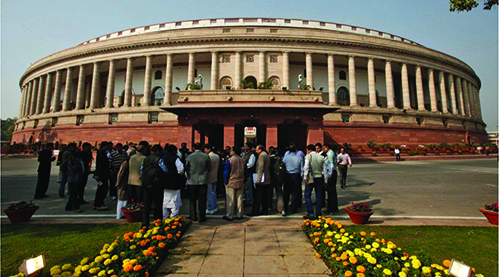
The Citizenship (Amendment ) Bill , 2016 introduced by Minister of Home Affairs , Mr.Rajnath Singh on 19th July 2016 in the LokSabha. The Objective of the Bill is to make amendments in the existing Citizenship Act, 1955. The existing Act provides for acquisition and determination of Citizenship. According to the Citizenship Act (1955), an illegal immigrant is defined as a person who enters India without a valid passport or stays in the country after the expiry of the visa permit. Also, the immigrant who uses false documents for the immigration process. Citizenship is granted to an individual by the government of the country when he/she complies with the legal formalities, so it’s like a judicial concept.
In India, the Citizenship Act, 1995 prescribes five ways of acquiring citizenship: 1. Birth 2. Descent , 3. Registration 4.Naturalization, 5.Incorporation of the territory.
If this Bill is passed in Parliament, illegal migrants from certain minority communities coming from Afghanistan, Bangladesh, and Pakistan will then be eligible for Indian citizenship. In short, illegal migrants belonging to the Hindu, Sikh, Buddhist, Jain, Parsi or Christian religious communities from Afghanistan, Bangladesh or Pakistan would not be imprisoned or deported. Moreover, these citizens gain permanent citizenship after six years of residency in India instead of 11 years — as mentioned in the Citizenship Act (1955). The registration of Overseas Citizen of India (OCI) cardholders may get cancelled if they violate any law.
An overview of the Citizenship Act, 1955:
The Act outlines different modes of acquiring Indian Citizenship; by birth, by descent, by registration, bynaturalization and by incorporation of territory. It also specifies the conditions and restrictions for attaining Indiancitizenship, termination of Indian citizenship and deprivation of Indian citizenship. The act has been amended overthe years.
Modes for Acquiring Indian Citizenship
The following section outlines the key features of the different modes for acquiring Indian citizenship:
1 By Birth
§ Born in India on or after 26th January 1950 but prior to 1st July 1987 is considered Indian citizen by birth irrespective of his/her parent’s nationality.
§ Born in India on or after 1st July 1987 is considered Indian Citizen only when either of his/parents was Indian citizen at the time of his/her birth
§ Born after 7th January 2004 is considered Indian citizens if both parents are Indian citizens or one parent is Indian citizen and other not an illegal migrant at the time of his/her birth.
2 By Descent
§ Born outside India on or after 26th Jan 1950 but before December 1992 is Indian citizen if his/her father was a citizen of India at the time of his/her Birth.
§ Born outside India post 10th December 1992 is considered Indian citizen if either of his/her parents is Indian citizen at time of his/her birth.
Born outside India post 7th January 2004 will b considered Indian citizen if his/her birth is registered at an Indian consulate within a year of the DOB or with the permission of the Central Govt. Or either of his/her parents is in service under The Govt. Of India.
3 By Registration
§ Been a resident of India for 7 years, of Indian origin and who or either of whose parents were born in India before independence.
§ Indian origin who are residents in any other country outside undivided India
§ Person married to an Indian citizen and been a resident in India for seven years before making an application
§ Minor children of Indian Citizens
§ Person registered as an overseas citizen of India for five years and has been residing in India for “one year”(amended in 2005)
4 By Naturalization:
Under the provisions of the Third schedule, the central Govt. grants a certificate of naturalization to any foreigner who is not an illegal migrant and has resided in India for an aggregate of 11 years.
5 By incorporation of territory:
People who are connected/part of a territory that becomes a part of India as per notified in the Official Gazette, those are considered Indian citizens as from the date of the specified order.
Cancellation of Indian Citizenship
The following section highlights the conditions under which the citizenship is terminated or renounced or cancelled.
1 Renunciation of Indian citizenship :
Any Indian citizen, also a citizen of another country, if voluntarily renounces his citizenship in a prescribed manner; in that case, he/she is no longer Indian citizen.
A minor child of any person (as amended on 1992) who ceases to be an Indian citizen will also be considered to cease Indian citizenship. However, if the minor within one year of attaining full age makes the declaration (as per the amendments made in the form on 3/12/2004), he/she can be considered for Indian Citizenship.
2 Termination of Indian citizenship :
Any citizen who has acquired Indian citizenship and then has voluntarily acquired citizenship of another country between 26th January 1950 to 30th December 1955 will not be considered Indian citizen. The only exception to this is if the citizenship of another country was acquired due to India’s engagement in a war, as directed by the Central Government.
3 Deprivation of the Overseas Indian citizenship :
Any Overseas citizen of India (OCI) is deprived of the citizenship by an order of the central Government as per the following conditions
Registration by means of fraud, false representation or concealment of material facts
• Disloyalty or disaffection towards the constitution of India as per law
• During any war in which India is engaged has unlawfully traded or communicated or involved in business in any manner with the enemy in that war.
• Imprisonment in any country within 5 years for a term of 2 years or more after registration or
naturalization.
• Resided outside India for a continuous period of 7 years
The Citizenship (amendment) Bill, 2016: This Bill introduced the following amendments to The Citizenship Act, 1955-
1. Provisions for Illegal Migrants
As per the Act, Illegal migrant means a foreigner who has entered into India without any valid passport or travel documents as authorized or prescribed by or under any law. It also includes people with valid passport or other valid documents but exceeding their stay beyond the permitted period of time. The act prohibits any illegal migrant from acquiring citizenship.
The Citizenship (amendment) Bill, 2016 seeks to amend this act by providing for certain group of people; minority communities namely, Hindus, Sikhs, Buddhists, Jains, Parsis and Christians from Afganistan, Pakistan andBangladesh to not be considered as illegal migrants for the following cases:
i) Exempted from provisions of passport (entry into India) Act, 1920. An act, which mandates
foreigners to carry passports
ii) Exempted from the application of the provisions of the Foreigners Act, 1946, by the Central
Government.An act, which regulates the entry and departure of foreigners in India.
2. Amendment of Overseas citizen of India (OCI) Cardholder
There are certain conditions under which the Central Government can deprive an overseas citizen of India of their citizenship.
The Citizenship (amendment) Bill, 2016 amends the act by adding another condition for depriving the OCI of their citizenship; on violation of any law or provisions of the act that is in force for the time being in the country.
3. Amendment of Third schedule: Acquiring citizenship by Naturalization
As mentioned in the previous section of acquiring citizenship, one of the criteria for the applying for citizenship by naturalization, is the time period for which the person has resided in India or has been in service of Government of India. The act states this time period for qualification to be an aggregate of at least 11 years.
The Citizenship (amendment) Bill, 2016 amends this act by providing an exception for minority communities, namely Hindus, Sikhs, Buddhists, Jains, Parsis and Christians from Afganistan, Pakistan and Bangladesh in this qualification criterion by reducing the time period from 11 years to 6 years.
Conclusion: Ultimately, The Bill amends the Citizenship Act, 1955 to make illegal migrants who are Hindus, Sikhs, Buddhists, Jains, Parsis and Christians from Afghanistan, Bangladesh and Pakistan, eligible for citizenship. And also Under the Act, one of the requirements for citizenship by naturalisation is that the applicant must have resided in India during the last 12 months, and for 11 of the previous 14 years. The Bill relaxes this 11 year requirement to six years for persons belonging to the same six religions and three countries. Finally, The Bill provides that the registration of Overseas Citizen of India (OCI) cardholders may be cancelled if they violate any law.
However the main issue to discuss on this Bill is —
The Bill makes illegal migrants eligible for citizenship on the basis of religion. This may violate Article 14 of the Constitution which guarantees right to equality.
The Bill allows cancellation of OCI registration for violation of any law. This is a wide ground that may cover a range of violations, including minor offences (eg. parking in a no parking zone).
Dr. SailajaPetikam.