
Commercial Courts, Division & Appellate Division of the High Court Act, 2016
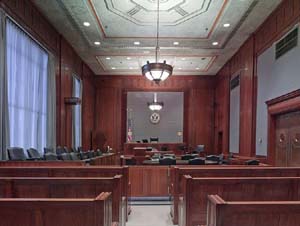 Commercial activities are corollary to commercial dispute however delay in the justice delivery resulted into denial of justice. Nonetheless to address the problem of delays in the commercial dispute resolution, law commission of India in 2003, presented a report titled as “proposals for constitution of hi-tech fast–track commercial divisions in high courts.” Commission recommended the establishment of “dedicated commercial court in high court division in India as various data about the pendency of commercial case in High court, having ordinary original jurisdiction shows that out of total 32,656 civil suits pending, a little more than half (16,884) or 51.7% of them are commercial disputes. It is true that rule of law and democracies can’t survives without effective and independence of judiciary, as they are interwoven with access to justice. Even though justice delivery system in India is affected by delays, notwithstanding mandatory time limit can’t be fixed to reduce the same. It is true that Effective commercial court can give teeth to the framework under which market and business operate. Recently Indian parliament had passed an Act “The Commercial Courts, Commercial Division, Commercial Appellate Division of the High Court Act, 2016. The long title describes the purpose of the legislation as ‘adjudication of commercial dispute of specified value.’
Commercial Courts in UK It has been said that the Establishment of Commercial Courts is the best way to meet the need of the “global village” and rule of law can be strengthening by the same.. Commercial Courts in England can be traced its history back to 1895, and still are part of Queen’s Bench division of high court. The most probable reason for the establishments of commercial court was due to the ‘identification of problem’ in delivery of high quality, cost savvy and effective justice in commercial disputes. To achieve the same in 1970, by statute Administration of Justice Act, 1970, ‘Commercial Court’ was recognized as a Division of the High Court. This Act is now replaced by the Administration of Justice Act, 1981. Under section 6 of administration of justice act, 1981, Judge in commercial courts is nominated by Lord Chancellor like that of puisne judges of High Court.
Commercial Courts In USA United state of America had commercial courts in almost 22 states. However author would be dealing with commercial court in New York only. Commercial Courts in New York County established in four parts in 1993, on a experimental basis. The objective behind the establishment of Commercial Court was ‘concentration of commercial litigation’ arose in those parts. Nonetheless in 1995, recommendation has been made by ‘commercial and federal litigation’ for the expansion of courts in other parts of the states; it further recommended the establishment of commercial division of state Supreme Court, which has been accepted and commercial division were established in Monroe as well as in New York. Due to complex nature and expenses included in commercial dispute” efficient case management” system for the disposal of litigation was proposed. These systems propose tracking the case from starting of filing of plaint till order or judgment has been delivered. As far as question of jurisdiction is concerned Commercial Courts can entertain complex commercial & business dispute in which party seek compensatory damage of $125,000. Justice of division was empowered to transfer the cases which in their judgment do not fall within the category. The positive effect of the Commercial Court was felt by the end of 1996, when the chief administrative judge reports that business courts resulted in a 29% reduction of average time to disposal. Today India has 72,97,985 pending civil cases. The CAC Act, 2016 Introduction Three types of courtsThe CAC act, 2016 provide for the establishment of three types of courts namely (i) Commercial Courts (ii) Commercial Division (iii) Commercial Appellate Division. Under Section 2(1)(a) Commercial Appellate Division shall be situated in a high court constituted under Section 5(1).
Meaning of commercial disputeas defined under
section 2(1)(c), commercial dispute has been given inclusive Definition. Under section 2(1)(c)(i) it also include ordinary transaction of merchants, banker, financiers and trader and those relating to mercantile document, including enforcement and interpretation of such document. Explanation attached to the provision provides that commercial dispute also includes ‘action for recovery of immovable property’ or ‘realization of monies arising out of immovable property given as security and other relief pertaining to immovable property. Commercial dispute also extended to govt. where it is one of the parties or any private body carrying public function.
Constitution of courts under the act
- Section 3(1) empowers state govt. to constitute such number of commercial courts after consultation of concerned high court by notification. Proviso provides that commercial court can’t be extended beyond the territory upon which high court had no ordinary jurisdiction. 2. State govt. with the concurrence of chief justice of high court shall appoint one or more person, under section 3(1)(3) who shall be well verse and experienced in the field of commercial law. 3. Chief Justice of High Court can appoint one or more person as judge or judges respectively. 4. Section 4(1) provides for constitution of commercial division of high court. Power to constitute Commercial division shall be vest with the chief justice of the high court having ordinary civil jurisdiction. He can constitute one or more benches consisting of a single judge for the purpose of exercising the jurisdiction and power conferred under this act. 5. Section 5(1) which deals with Commercial appellate division shall be constituted after notice has been issued under section 3(1) by the govt. or if orders under 4(1) are passed by the Chief Justice of concerned High Court for constitution of one or more division.6. The Judges for commercial appellate division shall be nominated under Section 5(2) by the Chief Justice of High Court.
Jurisdiction
Section 6 of the Act vested Commercial Court with jurisdiction to try suits as well as application related to a dispute of a specified value. Jurisdiction shall also be extended so as to try suit or application relating to such commercial dispute instituted as per the provisions of Sections 16 to 20 of the Code of Civil Procedure, 1908. Section 7 empowered the Commercial Division Court to try all suits and applications relating to commercial disputes of a Specified Value filed in a High Court having ordinary original civil jurisdiction. However proviso provides for the application of this section to all suits and applications relating to commercial disputes, stipulated by an Act shall be lie in a court shall not inferior to a District Court, and filed or pending on the original side of the HC, shall be heard and disposed of by the Commercial Division of the High Court. Amending connected laws 1. The CAC Act, 2016, under order XV-A provides for case management hearing i.e. time management of event took place in law suits form initiation to resolution. Thus Act provides for framing of issue and for fixing timeline. Under rule 2 of the order XV-A Court is also empowered to pass an order for framing of issues, listing of witness, date of filing of evidence, fixing date for filing written argument, setting timelines for parties and their advocates to address oral arguments. 2. The timeline fixed by the act for closing of Centerarguments is not later than six months form date of first management hearing. 3. The CAC Act, 2016 extendable to include matter pertaining to arbitration. Section 10 provides that in case of international commercial arbitration, an appeal or an application which has been filed in high court shall be heard and disposed of by the commercial division where such division has been constituted in high court. 4. Section 10(2) it provide jurisdiction of commercial courts in international commercial arbitration, however commercial court shall not have the jurisdiction if the matter is other than the international commercial arbitration, which otherwise lies in the civil court of original jurisdiction. 5. Pecuniary limit has been set for the above is not less than 1 crore.
Appeals
Under section 13, person aggrieved by the judgment/ order of commercial court or commercial appellate division on can appeals within 60 days. It also proposes amendment in section 37 of The Arbitration and Conciliation Act, 1996, as now appeals shall lies from such order passed by a commercial division or commercial court specifically enumerated under order XLIII of the code of civil procedure, 1908 and section 37 of the arbitration and conciliation act, 1996. However Act puts a bar on civil revision application or petition against an interlocutory order of a Commercial Court and the same is to be raised only in an appeal against the decree of the Commercial Court.
Transfer of pending cases: CAC, Act 2016 provide for transfer of pending suits under Section 15 whereby all suits, application, including application under Arbitration and Conciliation Act, 1996, relating to a commercial dispute of a specified value if pending in High Court where a commercial division has been
constitutes, it shall be transferred to Commercial Division. Under Section 15(2) pending application in civil court will also transferred if in that area Commercial Court has been constituted. However, by proviso, if final judgment has been reserved by court prior to the constitution of the commercial division or the commercial court, transfer can’t be done.
Conclusion & Challenges
Though the CAC Act, 2016 has been notified but there are some unanswered questions which remain challenges for the full realization of the act. 2. We are all aware of the lack of judges in Indian courts. Statistics shows that India had one of the worst judges per million population ratio. Thus, there remains an unanswered question about how we can tackle the demand of ‘extra’ judges. 3. Another important challenge is of the “specialized judges” as commercial case are complex in nature so proper and special training should be required. 4. Lack of infrastructure is one the important problem and still remains a reason that contributes to the pendency. Thus if CAC Act, 2016 has to be fully implemented proper infrastructure should be required. 5. Whether appointment of lay or retired judges as the judges in commercial court, commercial division and commercial appellate division is a viable option and if not than can the appointment be made under Article 224A of Indian constitution which provides for appointment of retired judges as sitting judges. 6. Role of technology in the proper and efficient disposal of commercial case can play an important role. Thus commercial court needs proper technological assistance from states. 7. To adopted “efficient case management” system to ensure delivery of justice in timely fashion. 8. Pecuniary limit should be increased so as to take more commercial cases within their ambit
-Deepak Kaneriya
Thanks for the information
I like your site its well designed
Well written
Very informative
Good article
contact author for suggestions @ [email protected]