
Singur Case Is A Major Landmark In Supreme Court Land Acquisition Judgments
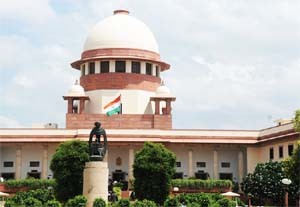 Coming straight to the root of the matter, let me get going by first and foremost pointing out that the Supreme Court of India has delivered an epoch-making monumental judgment titled ‘Kedar Nath Yadav v State of West Bengal & Ors’ more famously known in short as Singur case which shall always be remembered and quoted in the years ahead. It involved Tata Motors Ltd. It is in this landmark case that the Supreme Court has taken lot of pains in vividly interpreting the old and archaic Land Acquisition Act, 1894 in the light of changing times which has to be appreciated.
There was huge jubilation over the landmark Supreme Court judgment among those rank of farmers who were waiting to get back their lands. The Supreme Court order directed the state government of West Bengal to return the land acquired for Tata Motors to its original landowners. Mamata Banerjee who while in Opposition had led the struggle for return of land to the farmers from the forefront was ecstatic, felt vindicated and said amid applause that, “Land is our asset. Land is our strength. Land is more pure than gold.”
A Bench of Justices V Gopala Gowda and Arun Mishra said the acquisition of 997 acres by West Bengal’s Left Front government for the Tata Motors plant in Singur failed to meet the requirements of the Land Acquisition Act, 1894, and directed the state government to return the land to its owners in 12 weeks. The poor farmers are very happy over this landmark judgment which they rightfully should be. The Supreme Court termed the 2006 acquisition of nearly 1000 acres of land in West Bengal’s Singur district illegal and void.
The two Supreme Court judges gave separate reasons for terming the acquisition illegal. Justice Gowda, in his ruling, said the state government did not follow the requirements laid down in the Land Acquisition Act, and circumvented them under the guise of “public purpose”. Land was acquired only for Tata Motors and as such it could not be called a “public purpose” under the Act, he said.
Justice Mishra, however, said that the acquisition would ultimately benefit people by creating employment opportunities and industrialization. However, he agreed with his colleague on the violation of the provision of the Land Acquisition Act (Section 5A) that mandates a hearing of objections against acquiring land for public purposes. “The inquiry held under Section 5A is a farce and an eyewash; neither the collector nor the state government considered the matter with objectivity as mandated,” he said. Justice Gowda said the inquiry and the consequent approval for acquisition was done by the state government without applying its mind and by mechanically accepting the flawed report of the land acquisition collector.
Needless to say, the Supreme Court’s landmark judgment will have a far-reaching impact on the way the new land acquisition proposals with the Government are implemented. From now onwards, all governments whether in State or in Centre will have to be extra cautious to prevent themselves from landing in such a precarious position as has been witnessed in this landmark Singur case. They will have to abide by all the provisions of the new Land Acquisition Act, 2013. This Act puts an end to governments taking shelter under the subterfuge of “sovereign functions” and the power of “eminent domain” for violation of due procedures under the Act.
The fight over Singur land has been a long drawn one. It raged on for many years. Let me jog my readers memory a little back. Let me recapitulate the entire chain of events that took place in last 10 years. They are as follows : –
May 2006: Tata Motors announces Nano car plant which is the first one for small cars at Singur in West Bengal.
July 2006: Mamata Banerjee opposes the plant on fertile land.
December 2006: Protests against the acquisition begins.
January 21, 2007: Tata Motors starts construction of Nano car plant in West Bengal.
December 3, 2007: Mamata Banerjee announces indefinite hunger strike.
December 19, 2007: Tata Motors launches the Nano at Delhi Auto Expo.
December 28, 2007: Mamata Banerjee ends fast.
January 18, 2008: Calcutta High Court upholds Singur land acquisition, following which farmers and NGO moved the Supreme Court challenging the High Court order.
August 24, 2008: Mamata Banerjee starts indefinite dharna at Singur outside the car plant.
September 2, 2008: Tata Motors suspends work on Nano plant at Singur.
September 3, 2008: Governor Gopal Krishna Gandhi plays mediator; CPI(M)-led Left Front government and Trinamool agree to hold discussions.
September 5, 2008: West Bengal government and Trinamool start negotiations.
September 7, 2008: Talks break down.
October 3, 2008: Tata Motors decides to move out of Singur. It said that, “We cannot run a plant with police protection”.
October 7, 2008: Tata Motors announces new Nano Plant at Sanand in Gujarat.
May 20, 2011: Mamata Banerjee sworn in as Chief Minister of West Bengal, announces first Cabinet decision to return 400 acres of land to unwilling Singur farmers.
June 9, 2011: Takes over 997 acres citing non-performance by Tata Motors.
June 14, 2011: Singur Land Rehabilitation and Development Bill, 2011 passed in West Bengal Assembly.
June 22, 2011: Tata Motors moves Calcutta High Court challenging the Bill.
September 28, 2011: Calcutta High Court single bench upholds the Singur Land Rehabilitation and Development Act, 2011.
October 29, 2011: Tata Motors challenges the order.
June 22, 2012: A division bench of Calcutta High Court strikes down the Bill on an appeal by Tata Motors.
August 6, 2012: The West Bengal government moves the Supreme Court.
August 31, 2016: Supreme Court sets aside January 18, 2008 order of Calcutta High Court, allows appeals filed by some farmers and NGOs.
While craving for exclusive indulgence of my esteemed readers, it must be revealed here for their exclusive benefit that in this landmark judgment, the Supreme Court clearly and categorically laid down that land cannot be acquired for a private company unless “public purpose” is specifically declared. Even funds for acquisition should come from the public exchequer. It must also be revealed here that in this Singur case, the land was notified for the Tata Motors Ltd company for its small car project which itself could not be termed “public purpose”.
The Supreme Court held that it should be clearly spelt out that the project will be for socio-economic development, to generate employment and give fillip to the local economy. It was also held by the Apex Court that in cases of land acquisition, notices should be served to land owners individually which couldn’t be established in the Singur case from the official records. But it was not clear that how a notice can be served to a person who is repeatedly refusing to get notice or the persons collectively who are obstructing to receive notices for land acquisition.
Be it noted, the Apex Court also very categorically pronounced like in many previous judgments that proper opportunities of hearing should be provided by the Collector to the objectors of land acquisition. It needs no rocket scientist to conclude that it would be far much better if the decisions on the disposing of objections are publicly published so that the people may get a chance to know why their objections were rejected by the Collector at the first place. This will also promote more transparency as well as accountability.
Let me hasten to add here that the Supreme Court also further commented that the Tata Motors could not start operations as per the terms of the lease and farmers are entitled to take back their land and retain the compensation as they have been deprived of cultivation for the last 10 years. This palpably includes the time taken in litigation at various stages. It must be pointed out here that the Tata Motors has also miserably failed in concretizing the minimum land required for its plant generating employment for about 4,700 persons. It also merits mention here that the company had initially demanded 700 acres of land but ultimately ended up taking 1000 acres of land.
All said and done, this landmark judgment delivered by the Supreme Court in the Singur land acquisition case has hit the nail on the head and has very rightly sent a loud and clear message that justice should not only be done but also it must be seen to be done. Those who are poor, deprived and marginalized must get their legitimate due without fail. There can be no two opinions on this. This is exactly what the Supreme Court has sought to do in this landmark Singur case. All governments must follow this landmark judgment in letter and spirit so that they themselves don’t end up with eggs on their faces as we have seen happening in this landmark case.
-Sanjeev Sirohi,
Advocate,